Wisps of bright streamers fluttering with the wind
Stunning the world's eyes
Each action is like the picture on the Mogao Grottoes
Graceful and mysterious

As one of the four major classical dance of China, the Dunhuang dance has a history of less than 40 years.
The Dunhuang dance remained dormant for thousands of years until the 1970s, when it was discovered and created by the top authorities in Dunhuang Studies, such as Chang Shuhong, Duan Wenjie, Shi Weixiang. The choreographers and directors of the Gansu Song Sance Troupe have created a dance drama, “Tales of Silk Road” which was a huge success in 1979.

Mogao Caves, located in the Gansu region, is a world-renowned art treasure house with valuable artistic and cultural values. While Mogao Caves is best known for its diverse and graceful dance images, it fully demonstrates to the modern people as well as the whole world the Chinese ancient people’s artistic thought and the cultural accomplishment.

Over Mogao Caves of development, the 492 surviving Buddhist caves depict various dance images. For example, the famous “heavenly palace music and dance picture” reflects the image of the gods of music and dance in the imagination of the ancients.
Most of the dancers are carrying musical instruments, especially the movement of “playing Pipa” dance, which is very classic in Dunhuang Dance. It represents the outstanding characteristics of the combination of music and dance in Dunhuang dance.

The movement of “playing Pipa” once was sealed in the Mogao Grottoes 112 Cave Dance Posture, by different people in different time interpretation. It is a very wonderful thing.
I think of it as a legacy. Culture has passed through the baptism of time, passed down the most dazzling luster.
In 2008, the director of Olympic opening ceremony used the flying arts and silk dance from the Dunhuang dance. The flying display at the opening ceremony of the Olympic Games is particularly eye-catching. These flying not only beautiful and gentle, but also elegant.
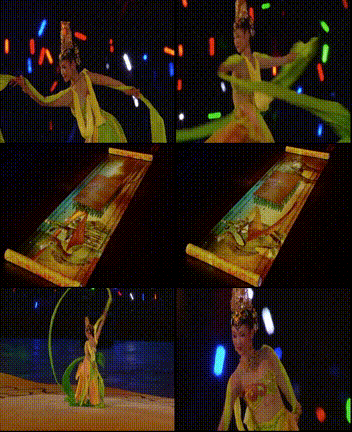
Flying is an important element of Chinese Buddhist culture, a common positive role in Buddhist scriptures, and a common theme in Chinese Buddhist Murals, sculptures, novels and poems.
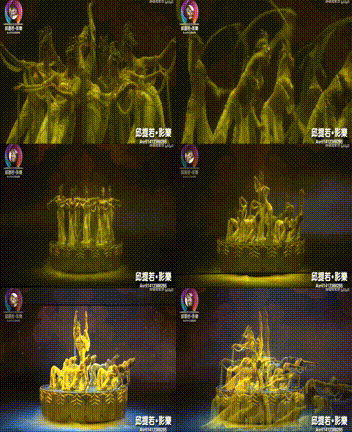
 Dance Clips